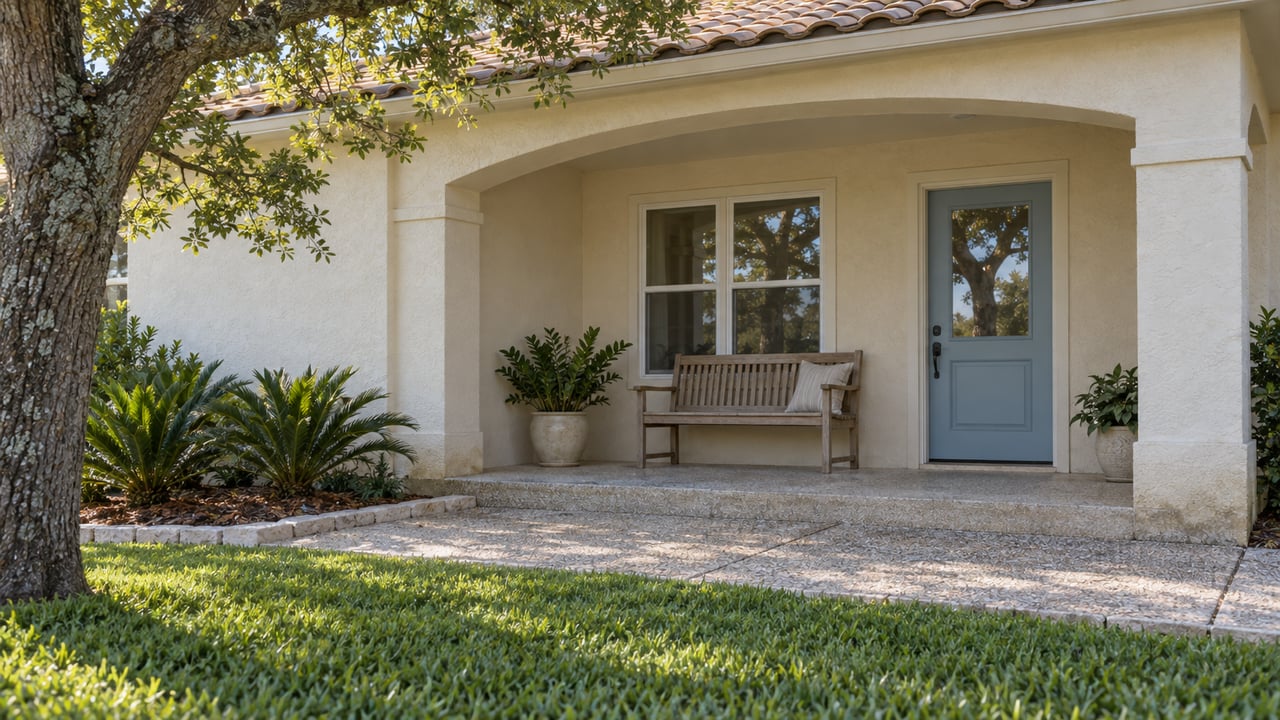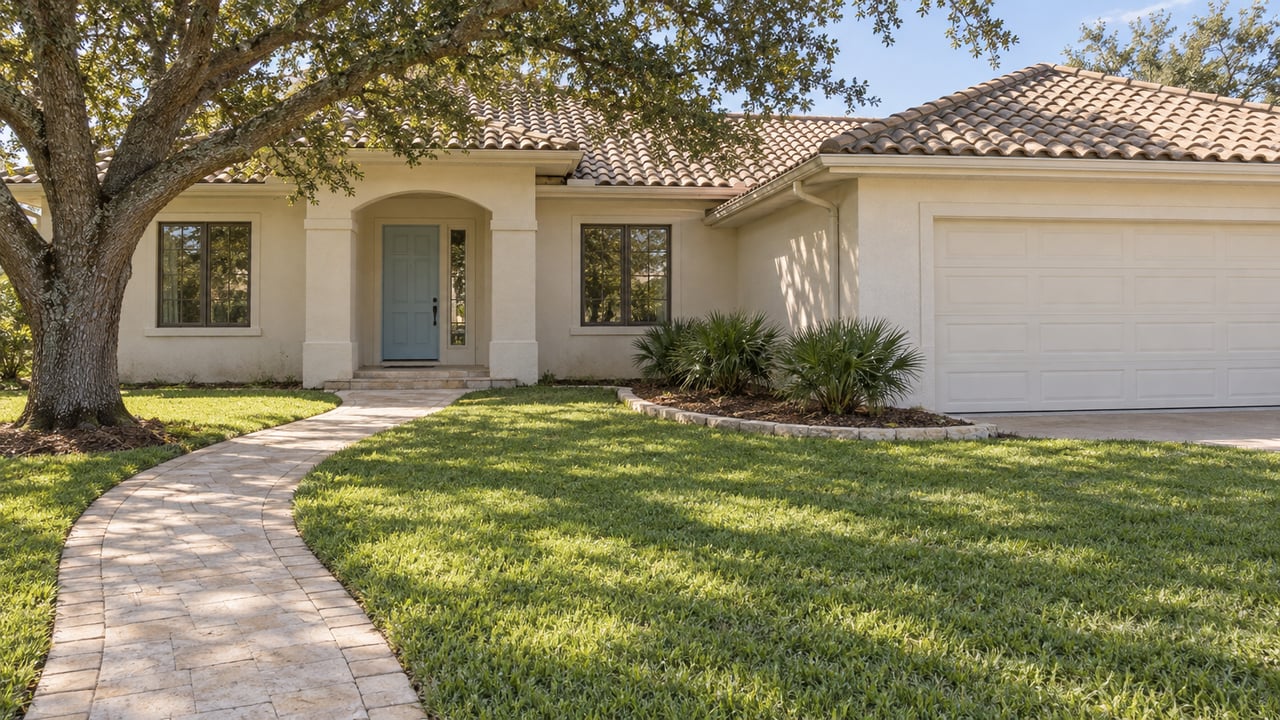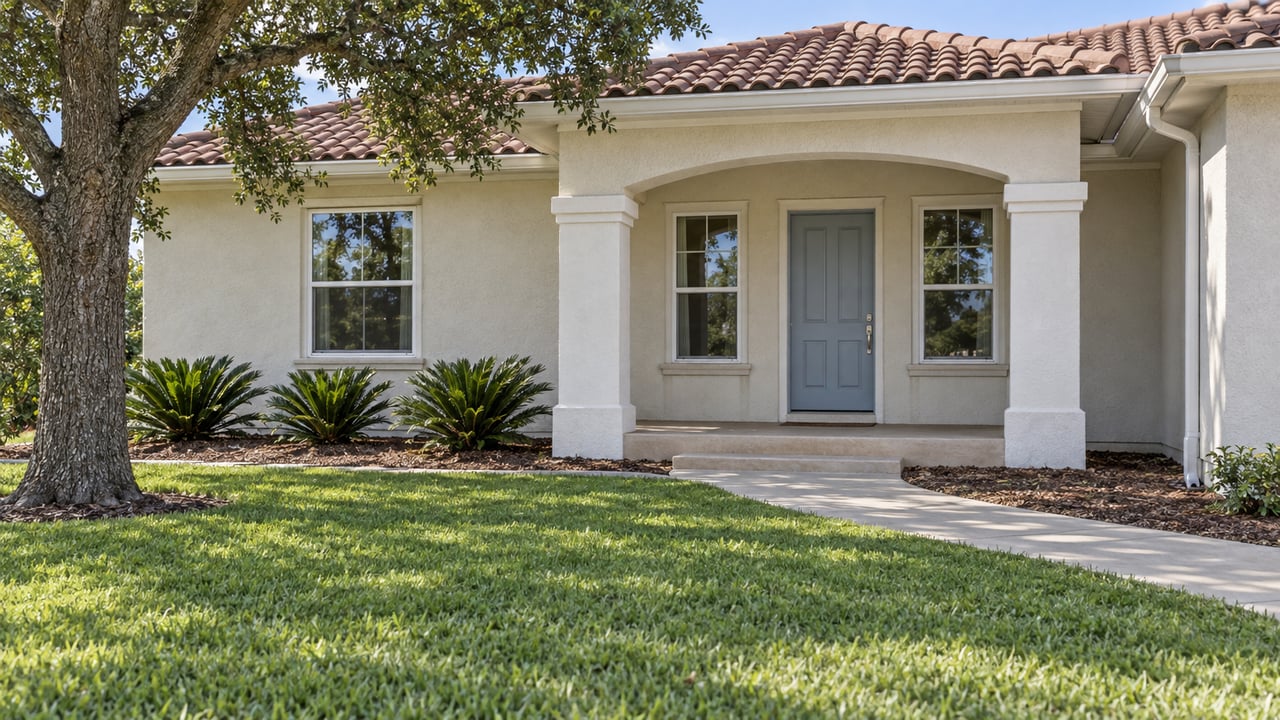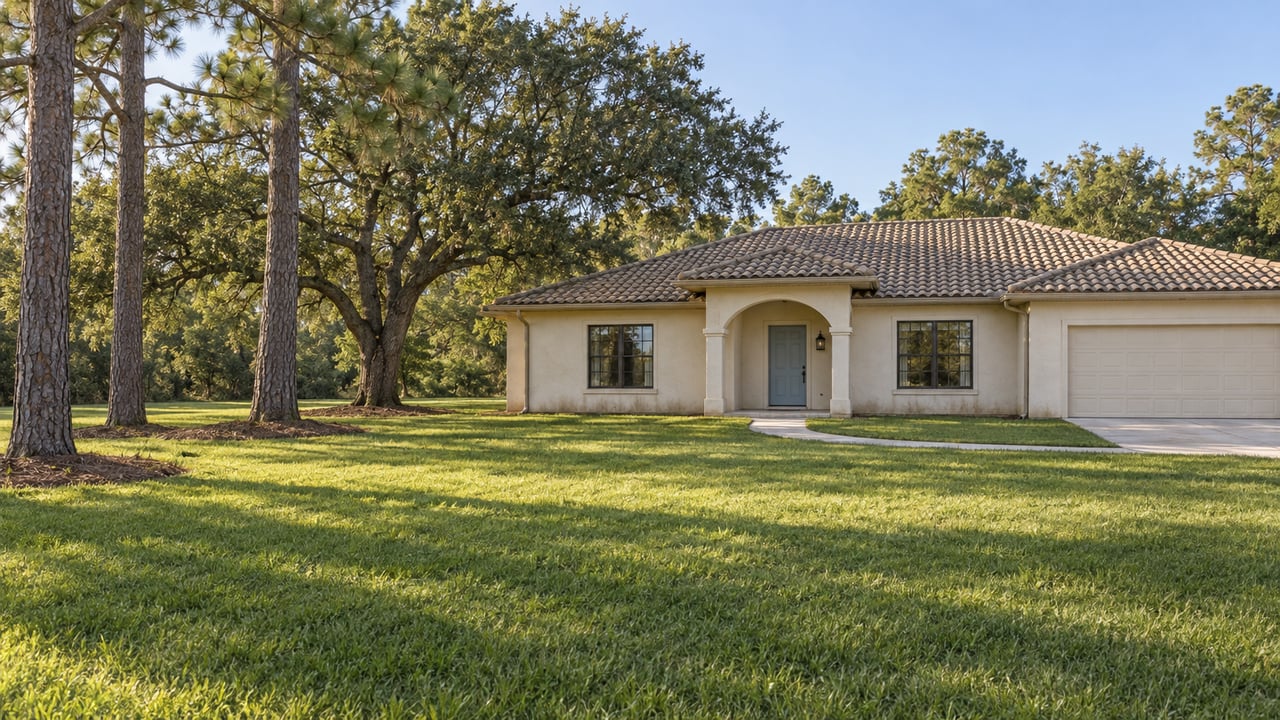
In Pine Ridge, a one-acre lot can't be cleared like one acre anymore. The Pine Ridge Property Owners Association now treats a strip along each side line and the rear line of a lot as a Tree Preservation Zone. The standard width is 15 feet, and a short list of written exceptions covers fences, horse lots, hazard trees and utilities. The deed restrictions say the zone is "maintained in perpetuity," and outside those exceptions no mature tree can be taken out of it, whether the lot is vacant or already has a house. Owners voted the zone in by a two-thirds majority in May 2026. On October 27, they passed three more tree amendments along with 11 other changes.
If you're comparing lots in Beverly Hills 34465, here's the practical effect. Two parcels with the same acreage can now have very different amounts of land you can actually build on, fence, or turn into pasture, and the listing acreage won't show you the difference.
The Buffer Sits Inside the Setback Math, Not On Top of It
The restriction text spells out that the TPZ "is not the structure setback requirement." Setbacks control how close a building can sit to the lot line. The TPZ controls which trees stay standing, no matter what's being built. On a corner lot, the zone covers the rear line and the side line that doesn't face a street.
For a sense of scale, picture a square one-acre lot, about 209 feet on each side. Two 15-foot side strips plus a rear strip between them add up to roughly 8,900 square feet. That's about a fifth of the acre where no tree 4 inches or wider can come down. This is our own illustration. Real lot shapes vary, and a narrow, deep lot gives up more of its area to the side strips.
The protected size is small. Under the restrictions, a "Mature Tree" is any tree 4 inches or more in diameter, measured 4.5 feet above the ground. In a wooded lot, that covers far more than the big oaks.
A Second Rule Counts Trees Across the Whole Lot
Most buyers will spot the perimeter strip. The tree count gets missed more often. Every lot has to keep a minimum of 30 mature trees per acre, with acreage rounded to the nearest tenth. The association's own example is a 2.77-acre lot, which rounds to 2.8 acres and needs 84 trees.
"If Mature Tree(s) removal to accommodate construction of a Main Structure, results in that Lot having fewer than its calculated Minimum Mature Tree Number, then an equal number of Replacement Trees is required to be planted to restore that Lot's Minimum Mature Tree Number."
Replacement hardwoods have to be at least 2 inches in diameter, measured one foot above the ground. Conifers have to be 5 to 6 feet tall. Replacements can go anywhere on the lot. A lot that started with fewer than 30 mature trees per acre isn't required to plant more. Its existing count becomes its minimum from then on.
So two numbers decide what you can build on a Pine Ridge lot. One is the TPZ along the edges. The other is the tree minimum across the whole parcel. A heavily wooded lot can clear its building pad and still meet the minimum. A sparse lot gives up whatever it cuts.
Fences, Barns and Hazard Trees Each Get Their Own Rule
The written exceptions turn the rule into a site plan, and most of them come with a specific measurement.
| Situation | What the restrictions allow |
|---|---|
| Fence inside the TPZ | Clearing up to 3 feet on either side of the fence, with replacement trees if the lot falls below its minimum |
| Lot where horses will be stabled | TPZ narrows to 10 feet, but only with an approved stable, barn or tree clearing application posted first |
| Equestrian lot with no stable or barn | TPZ stays at 15 feet |
| Combined lots over one acre | Required trees can sit on any part of the lot, so a three-acre lot's 90 trees can all stand on one acre |
| Hazard tree removal | Follows Citrus County Land Development Code Chapter 5, Section 5700; if the removal affects the lot's minimum tree count, no replacement is required and the minimum drops by the number of hazard trees removed |
| Specimen trees, 24 inches or more | Preserved as the county code specifies |
| Accessory structure on a developed lot | Mature trees in the way can come out, with replacements to restore the minimum |
The equestrian row matters most here. Pine Ridge is still a horse community, and the rule has a sequence built into it: approval for a stable or barn comes before any pasture is cleared. Even then, the 30-per-acre count still applies. If you're buying acreage for horses, the barn location, the pasture, and the tree count all have to work together on paper before any trees come down.
For developed lots, any improvement that needs an Architectural Design Committee application and touches the TPZ or the tree count also needs a Tree Preservation Plan. According to the association manager, the projects that need an ADC application include fences, sheds, carports, pools, solar panels, accessory structures and home additions. That makes the pool-and-screen-enclosure plan many buyers bring to a resale home a TPZ question too.
Building From Raw Land Now Runs on a Fixed Sequence
For a new house, the paperwork comes before the chainsaw. Under the restrictions, the order goes like this:
- Submit a Tree Preservation Plan, shown on the boundary survey and displayed in the permit box.
- Submit signed and notarized tree affidavits for both Citrus County and the association.
- Get an environmental inspection from a licensed consultant, which checks for protected species before any clearing.
- Post a signed Tree Inspection Schedule in the permit box.
- Mark the TPZ with continuous 2-inch yellow caution tape before any tree removal starts.
- Pass association inspections before removal, after preconstruction removal, and when the main structure is finished.
Association staff or an agent do the inspections within three to five business days of written notice. If an inspection finds a tree violation, a stop work order takes effect immediately, and work resumes only after written resolution with management. The association has an express easement to enter a lot to check compliance.
The county adds its own layer. Citrus County's Building Division sets a tiered approach. You can keep your trees and pay no tree permit fees, replace removed trees on the property, or pay a mitigation fee based on how many trees come out and how big they are. The county doesn't issue permits for land clearing alone. A permit is issued only when someone is going to build. All of this is laid out on the county's Tree Preservation Standards page, which also links the Tree Preservation Affidavit.
The October Vote Tightened the Wording
The October referendum included three changes to the tree rules. According to the vote report the association posted, the three tree amendments did the following:
- Clarified that permission to remove trees for construction doesn't mean every tree in the TPZ can come out. It passed 748 to 291.
- Clarified how the TPZ is measured, because the old wording "could be misinterpreted." It passed 765 to 270.
- Added an exception allowing TPZ tree removal when it's needed to install utilities. It passed 803 to 221.
The same referendum changed rules on model homes, roofs, picket fences, structure colors and hurricane protection. The association's results post says all 14 amendments passed. The vote report directs owners to attachments that show each change in strike-and-add format. Since the measurement and utility changes affect the TPZ directly, a buyer reviewing a lot this month should read that exact wording.
Why the Association Wrote This Down Now
The timing tracks how fast Pine Ridge is filling in. In the August 2026 newsletter, POA President John Hyde wrote that more than 1,000 new homes went up in Pine Ridge over the past ten years and that the community is "now approaching 3,800 homes." His message also notes that for years, dues from vacant-lot owners helped carry the community. As those lots get built, amenities and staff face more demand. Holiday Builders is currently marketing new construction in Pine Ridge, where homesites start at one acre.
Countywide, the pace is similar. Census-based permit data compiled by Localflare shows Citrus County authorized 1,970 housing units in the 12 months ending August 2026. Of those, 1,943 were in single-unit buildings, and the total was down 10% from the prior 12 months. Much of that building happens on wooded parcels like the ones in Pine Ridge.
The board's campaign line was "Keep Pine Ridge, Pine Ridge." The tree amendment puts that line into recorded documents. The newsletter lists Clerk of Court recordings dated July 7 and July 20, 2026. The Environmental Awareness and Education Committee, chaired by John DeVore, has asked residents to call and email the office if they see equipment on a staked lot without a permit box and yellow tape. In the committee's words in the August 2026 association newsletter, "It only takes a day or two to clear a lot." The committee asks management to post a Stop Work Order sign until the builder complies.
Quick Answers
Do I have to plant trees on my existing lot? No. The committee states that "No one is required to plant new trees." Replacement planting only applies when removal takes a lot below its minimum.
Does the TPZ apply to homes that were already built? The August newsletter says the mature-tree prohibition in the TPZ applies to "ALL Lots, including yours and mine."
Where can I read the full text? The association posts a readable version of the Pine Ridge deed restrictions, and recorded copies are on the member portal at pineridgeassn.com. The office is at 5690 W. Pine Ridge Blvd., and the phone number is 352-746-0899. The association has also scheduled a Welcome Open House for new and established owners on November 7.
This post is general information, not legal, tax or financial advice. Before you buy, clear, or build, confirm how these rules apply to your lot with the association and a qualified professional.
If you're weighing a Pine Ridge lot or a home where you plan to add a pool, fence or barn, the Edward Johnston team can help you get the survey, the TPZ lines and the tree count in front of you before you make an offer. Search Sugarmill Woods Homes, then give us a call so we can walk the lot line with you.